

One day, you notice another child your little one’s age happily chatting away while your child stays silent. Suddenly, a question you never thought about before won’t leave your mind—“Is my child’s speech developing normally?”
As parents, it’s natural to compare your child’s milestones with those of other children. While every child develops at their own pace, speech and language skills usually follow a predictable pattern. If your child isn’t saying their first words, struggles to communicate, or seems behind compared to children of the same age, it’s understandable to feel concerned.
The good news is that not every late talker has a speech delay, and not every speech delay indicates a serious condition. However, recognizing the signs early and understanding when to seek professional guidance can make a significant difference in your child’s communication and overall development.
In this guide, we’ll explain what speech delay is, how to recognize the early signs, when parents should seek help, and how speech therapy in Vadodara can support your child’s communication journey.
The earlier speech delays are identified, the sooner children can receive the right support to build confidence, communication, and lifelong learning skills.
Understanding Speech Delay
What Is Speech Delay?
Speech delay means a child is learning to speak more slowly than expected for their age. They may not say their first words on time, struggle to combine words into short sentences, or have difficulty pronouncing words clearly. While some children naturally begin talking later than others, speech delay refers to a noticeable gap in reaching expected speech milestones.
It’s important to remember that every child develops differently. Some children simply need a little more time, while others may benefit from additional support to strengthen their communication skills. Understanding the difference between a temporary delay and a developmental concern is the first step toward making informed decisions for your child.

How Is Speech Delay Different from a Language Delay?
Although the terms are often used interchangeably, speech delay and language delay are not the same.
Speech delay refers to how a child produces sounds and words. A child with a speech delay may know what they want to say but struggle to pronounce words clearly or speak understandably.
Language delay, on the other hand, relates to understanding and using language. A child may have difficulty following simple instructions, understanding questions, or expressing their thoughts and feelings using words.
Some children experience only a speech delay, while others may have both speech and language delays. A professional assessment can help identify the exact difficulty and determine the most appropriate support.
Is Your Child’s Speech Development on Track?
What Speech Milestones Should Children Reach at Different Ages?
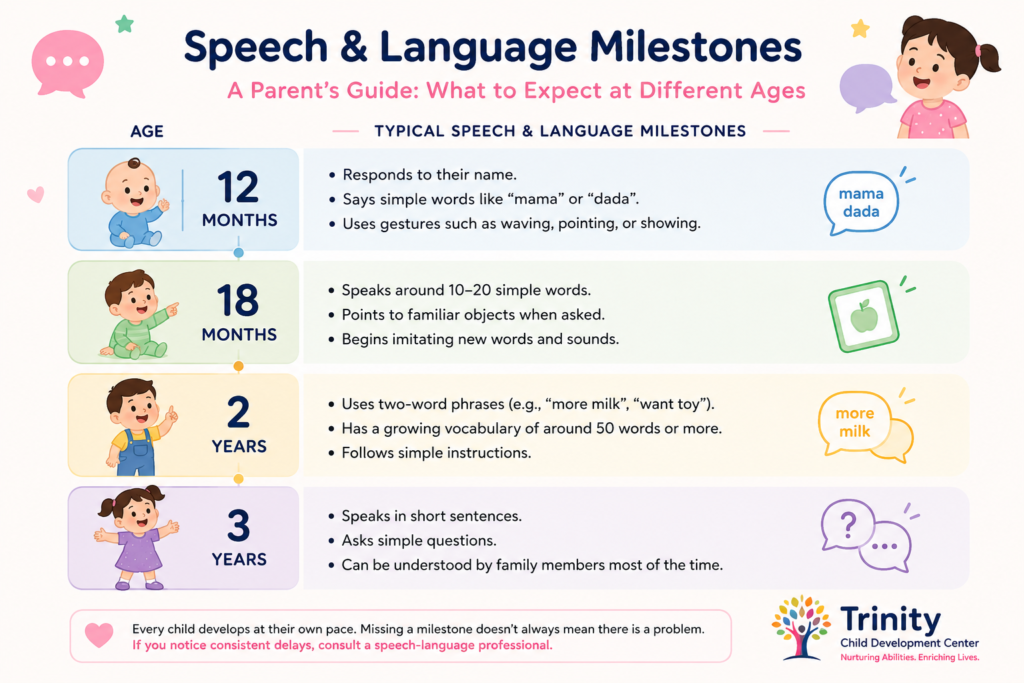
Every child develops at their own pace, but there are certain communication milestones that most children achieve within a similar age range. These milestones serve as a helpful guide for parents to understand whether their child’s speech and language development is progressing as expected.
| Age | Typical Speech & Language Milestones |
| 12 Months | Responds to their name, says simple words like “mama” or “dada,” and uses gestures such as waving or pointing. |
| 18 Months | Speaks around 10–20 simple words, points to familiar objects when asked, and begins imitating new words. |
| 2 Years | Uses two-word phrases such as “more milk” or “want toy,” has a growing vocabulary of around 50 words or more, and follows simple instructions. |
| 3 Years | Speaks in short sentences, asks simple questions, and can be understood by family members most of the time. |
Missing a single milestone doesn’t always mean there is a problem. However, if your child consistently falls behind several milestones or shows little progress over time, it may be worth consulting a speech therapist for professional guidance.
When Should Parents Start to Worry?
As a parent, it’s completely natural to wonder whether your child is simply taking a little longer to speak or if it’s time to seek professional guidance. While every child develops differently, persistent delays in reaching important speech milestones shouldn’t be ignored.
If your child isn’t saying any meaningful words by 18 months, struggles to combine two words by the age of two, or finds it difficult to communicate even with familiar people, it may be time to consult a speech therapist. Seeking help early doesn’t mean something is seriously wrong—it simply gives your child the best opportunity to develop strong communication skills.
Remember: Early support often leads to better outcomes, and asking for guidance is a sign of proactive parenting, not overreacting.
What Are the Early Signs of Speech Delay?
What Are the Common Signs of Speech Delay in Toddlers?
Children learn at different speeds, but certain signs may indicate that your child could benefit from a professional speech and language assessment. Looking out for these signs can help parents make informed decisions without unnecessary worry.
Common signs include:
- Limited or no meaningful words for their age.
- Difficulty pronouncing simple words clearly.
- Doesn’t respond consistently when their name is called.
- Relies mostly on gestures instead of speaking.
- Finds it difficult to combine two or more words into simple phrases.
- Gets frustrated because they cannot express their needs.
- Has trouble understanding simple instructions.

Not every child who shows one of these signs has a speech delay. However, if you notice several of these behaviours consistently, it’s a good idea to seek professional advice rather than waiting for the problem to resolve on its own.
Does Every Late Talker Need Speech Therapy?
The simple answer is no.
Some children are naturally late talkers and eventually catch up with their peers without requiring therapy. However, it isn’t always easy for parents to know which children will catch up independently and which may need additional support.
A speech therapist can evaluate your child’s communication skills, understand the reason behind the delay, and recommend whether therapy is necessary or if monitoring their progress is enough. An assessment provides reassurance and helps parents make informed decisions instead of relying on guesswork.
When in doubt, it’s always better to ask questions early rather than waiting and wondering.
What Causes Speech Delay?
Why Do Some Children Experience Speech Delays?
Speech delay can happen for many different reasons, and in many cases, it’s caused by a combination of factors rather than a single issue. Every child is unique, which is why identifying the underlying cause is so important.
Some common reasons include:
- Hearing difficulties that affect the ability to learn sounds and words.
- Developmental differences that influence communication skills.
- Oral-motor challenges that make producing speech sounds difficult.
- Limited opportunities for communication and interaction.
- Neurological or genetic conditions that affect speech and language development.
It’s important to remember that having a speech delay does not automatically mean a child has a serious medical condition. A professional assessment helps determine the reason behind the delay and guides the next steps for support.
Does Speech Delay Always Mean Autism?
This is one of the most common concerns parents have, but the answer is no.
Many children with speech delays do not have Autism Spectrum Disorder (ASD). Speech delay can occur for a variety of reasons, including hearing problems, developmental differences, or simply because a child develops speech later than expected.

However, some children with autism also experience speech and language delays along with other signs such as reduced eye contact, limited social interaction, repetitive behaviours, or difficulty engaging with others. Because every child is different, it’s important not to assume the cause based on speech alone.
If you have concerns about your child’s overall development, consulting a qualified speech therapist or child development specialist can provide clarity, reassurance, and the right guidance for your child’s individual needs.
Why Is Early Intervention Important?
Many parents hope that their child will “grow out of it,” and sometimes they do. However, when a genuine speech or language delay is present, waiting too long can make it harder for children to catch up. The early years are when a child’s brain is developing rapidly, making this the best time to strengthen communication skills.
Early intervention doesn’t just help children learn to speak more clearly. It also supports social interaction, emotional expression, learning, and confidence. Children who can communicate their needs are often less frustrated and better able to connect with family, teachers, and friends.
The goal isn’t to rush your child—it’s to provide support at the right time if they need it. Even if therapy isn’t necessary, an early assessment can give parents valuable reassurance and guidance.
Finding the Right Speech Therapy in Vadodara
Choosing a speech therapist is an important decision for every family. Beyond qualifications and experience, parents should look for a place where their child feels comfortable, understood, and encouraged to communicate.
Effective speech therapy is never one-size-fits-all. Every child has different strengths, challenges, and learning styles. The best therapy plans are personalised, involve parents in the process, and focus on helping children communicate confidently in everyday life—not just during therapy sessions.
If you’re looking for speech therapy in Vadodara, taking the time to ask questions, visit the centre, and understand their approach can help you make an informed decision that feels right for your family.
What Should Parents Look for in a Speech Therapy Centre?
Finding the right speech therapy centre isn’t only about choosing the nearest clinic. It’s about finding professionals who understand child development and create a supportive environment where children enjoy learning.
When exploring your options, consider whether the therapists are qualified and experienced in working with children. Ask if they perform detailed assessments before starting therapy, create personalised treatment plans, involve parents in home practice, and regularly review progress. A child-friendly environment with engaging activities can also make therapy more enjoyable and effective.
Most importantly, choose a centre where you feel comfortable asking questions and where your concerns are listened to with patience and empathy.
Why Do Families Choose Trinity Child Development Center?
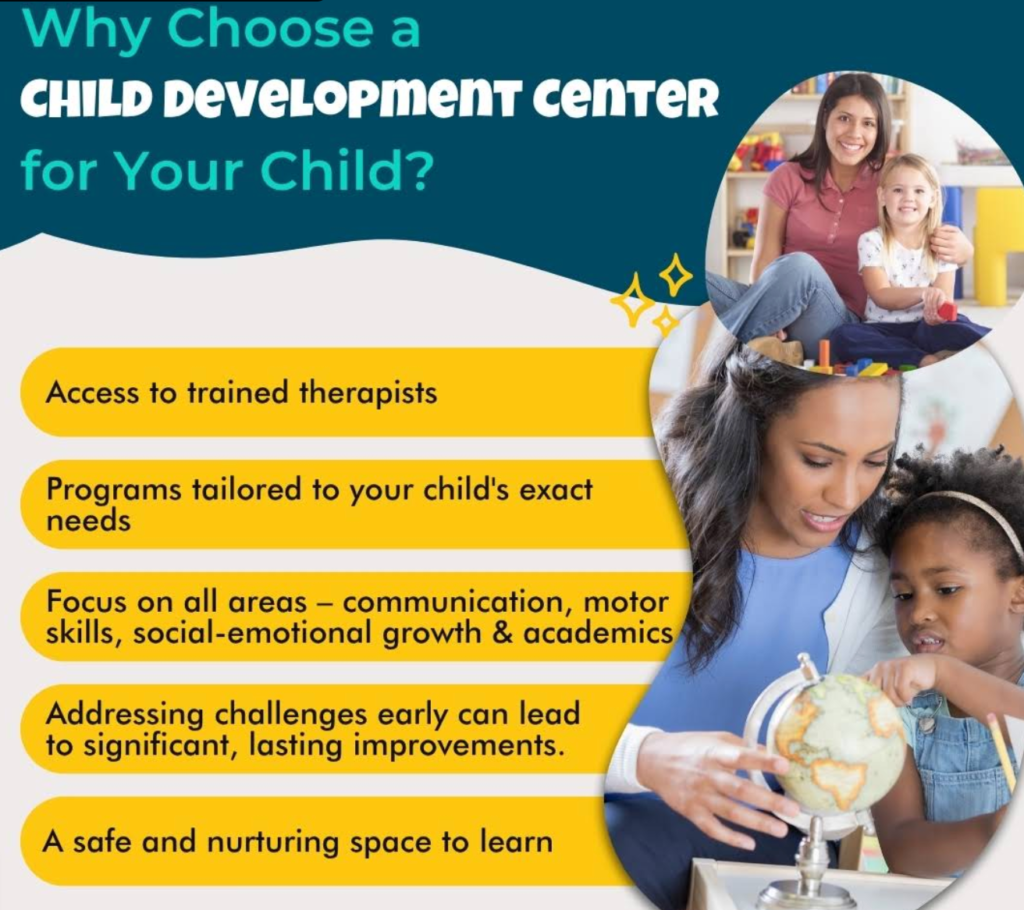
Many families looking for speech therapy in Vadodara choose Trinity Child Development Center because of its child-centred and multidisciplinary approach. Rather than focusing only on speech, the team looks at each child’s overall communication, learning, behaviour, and developmental needs.
Speech therapists work closely with parents to understand each child’s strengths, identify areas that need support, and create individualised therapy goals.
Families are guided throughout the process with practical strategies they can continue at home, helping children build communication skills beyond the therapy room.

For parents seeking compassionate, evidence-based support, Trinity aims to provide a welcoming environment where children can learn, grow, and communicate with greater confidence.
Frequently Asked Questions
Is my child just a late talker?
Possibly. Some children naturally begin speaking later than others and eventually catch up without therapy. However, it isn’t always easy to tell the difference between a late talker and a child with a speech or language delay.
If your child has very few words for their age, struggles to understand simple instructions, or isn’t making steady progress over time, it’s worth seeking a professional assessment. An evaluation can provide clarity and help you decide whether monitoring or therapy is the best next step.
Can speech delay improve without therapy?
In some cases, yes. Certain children improve naturally as they grow, especially if the delay is mild. However, others need structured support to develop their communication skills effectively.
Because every child is different, it’s difficult to predict improvement without an assessment. Consulting a speech therapist early allows parents to make informed decisions instead of relying on hope or guesswork.
At what age should speech therapy begin?
Speech therapy can begin as soon as a delay is identified. There is no need to wait until a child starts school if concerns are already present.
In fact, early intervention is often more effective because young children learn and adapt quickly. If your child isn’t meeting expected communication milestones or you’re worried about their speech, seeking advice sooner rather than later is generally recommended.
How long does speech therapy take?
There is no fixed timeline because every child’s needs are different. Progress depends on factors such as the cause of the delay, the child’s age, consistency of therapy, and practice at home.
Some children achieve their goals within a few months, while others benefit from longer-term support. Your speech therapist will regularly review progress and adjust the therapy plan as your child’s communication skills improve.
Where can I find speech therapy in Vadodara?
Vadodara has several professionals who provide speech and language therapy for children. When choosing a centre, look for qualified therapists, personalised treatment plans, and an approach that involves parents throughout the therapy journey.
If you’re looking for comprehensive developmental support, Trinity Child Development Center in Vadodara offers speech therapy as part of a multidisciplinary approach designed to help children reach their communication potential.
Note: This article is intended for educational purposes and should not replace a professional assessment. If you have concerns about your child’s communication, consult a qualified speech-language pathologist.
Conclusion
Watching your child struggle to communicate can feel overwhelming, but you’re not alone—and more importantly, you’re not powerless. Understanding speech milestones, recognising early signs of delay, and seeking guidance when needed are positive steps that can make a meaningful difference in your child’s development.
Remember, not every late talker needs speech therapy, but every concerned parent deserves clear answers. An early assessment can provide reassurance, identify any underlying challenges, and ensure your child receives the right support at the right time.
If you’re concerned about your child’s communication skills, speaking with experienced professionals at Trinity Child Development Center can help you better understand your child’s needs and explore the most appropriate next steps.
Have you noticed any changes in your child’s speech or communication that have made you wonder whether it’s time to seek professional guidance?